

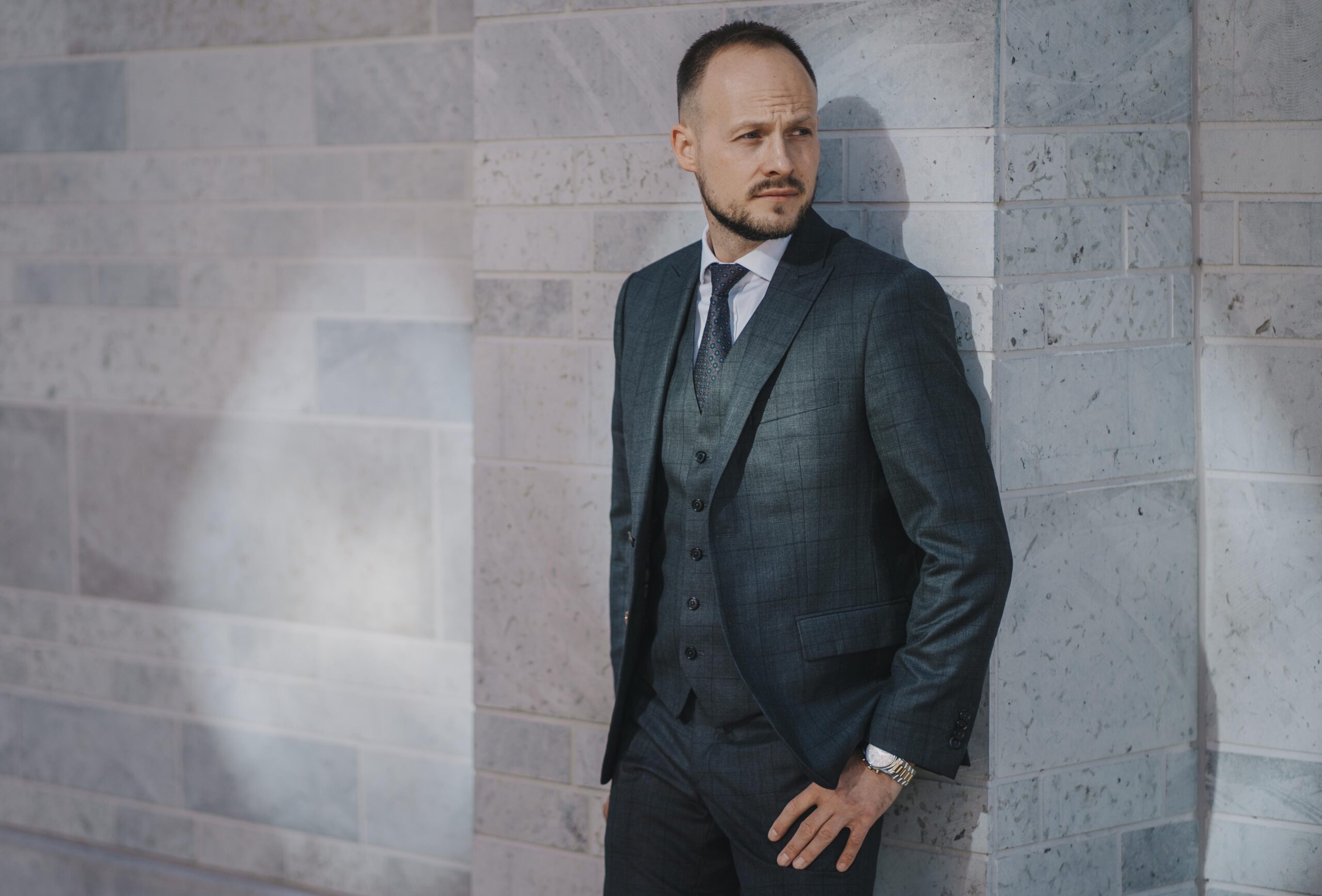
Hardi Põder

Monika Jakobson
Spiritual bypassing means using spiritual experiences, practices or language to avoid emotional work instead of doing it. The psychologist John Welwood named it in 1984. After psychedelic retreats it has a recognizable shape: more experiences, better vocabulary, and a life at home that hasn’t changed. I know that shape well. I lived inside it for years.
I’ve met executives who can describe their visions in forensic detail and can’t have one honest conversation with their teenage daughter.
Ask them about the ceremony and you get twenty minutes. Ask what changed at home and you get an abstraction.
That’s the tell. It’s always the same tell.
What is spiritual bypassing?
Welwood described it as trying to “avoid or prematurely transcend basic human needs, feelings, and developmental tasks” through spiritual practice (Welwood, 1984). In a later interview he put it more bluntly: using spiritual ideas and practices to sidestep unresolved emotional issues and old wounds instead of facing them (Tricycle, 2011).
Counselors have since described how clients use spiritual beliefs, practices and experiences to avoid real contact with their psychological unfinished business (Cashwell et al., 2007). Researchers have built a scale to measure it, with two facets they call psychological avoidance and spiritualizing (Fox et al., 2017).
The experiences are real. That’s what makes bypassing hard to see. Nobody is faking the tears or the insight. The experience is simply doing a job the person never hired it for: keeping the difficult material at a beautiful distance.
What does it look like after a psychedelic retreat?
You fly home on Sunday with total clarity. You know what matters. You’ve seen it.
Then Monday arrives. The inbox explodes. The board wants answers. A nervous system that has run the same way for twenty years snaps back like a rubber band, and within weeks the clarity has become a story you tell at dinner parties.
So you book the next one.
Clinicians who work in psychedelic harm reduction describe that step precisely: “Individuals disappointed with the outcome of psychedelic use may seek additional psychedelic experiences,” sometimes at a higher dose or with a different substance (Gorman et al., 2021). In a survey of 1,833 psychedelic users, people who took psychedelics to escape tended to have more avoidance-type experiences, and those went with less psychological flexibility, not more (Wolff et al., 2022). One of the field’s leading neuroscientists has a phrase for where this can end: “an escapist defense, dressed up as a spiritual awakening” (Carhart-Harris & Friston, 2019).
To be clear about the evidence: nobody has measured how common bypassing is among psychedelic users. Clinicians and integration researchers warn about it. What I describe below comes from my own history and from the leaders who reach us after a retreat.
I’ve done more than 100 ceremonies. Yes, they opened doors. But what actually changed my life was the months of work afterward: the daily practice, the uncomfortable conversations with my wife, the therapy sessions where I faced parts of myself I’d been running from since childhood.
For years before that, I could talk about ego dissolution with real authority. My family could have told you nothing had changed.
↳ I wasn’t transforming. I was collecting.
Why are high performers so good at it?
Because they approach this the way they approach everything that has ever worked for them: maximum input, minimum time, measurable return.
Highest dose available. Compressed schedule. A clear deliverable at the end. Pay the money, have the experience, expect the result.
That is a superb operating system for building a company. It’s close to the worst one for this work, because the work depends on not being in control, and control is the exact skill that built the career.
The research on what shapes a psychedelic experience points the same way. A review of 14 studies found that absorption, openness, acceptance and surrender went with positive experiences, while low surrender and a preoccupied, apprehensive state went with adverse reactions (Aday et al., 2021). In a survey of 143 psilocybin users, surrender at the start of the session was the strongest predictor of a mystical-type experience, and preoccupation the strongest predictor of a challenging one (Russ et al., 2019).
Preoccupation is a fair description of most executives’ resting state.
↳ You cannot optimize your way into surrender. It’s the entry requirement.
Isn’t a stronger experience a deeper one?
Not reliably.
In pooled data from 23 laboratory studies with 261 volunteers, dose was the strongest predictor of the response, and the researchers still found “considerable unpredictability in anxious reactions to psilocybin – even under highly standardized conditions” (Studerus et al., 2012). A meta-analysis of 17 studies found that higher doses intensified most dimensions of the experience (Hirschfeld & Schmidt, 2021).
↳ A higher dose buys intensity. Nothing in that data says it buys change.
None of this argues against the compounds themselves. The problem is treating them like a performance supplement. And this is not advice about dosing, which belongs with the clinicians who screen you.
A peak experience is information
The most quoted study in this field followed 36 volunteers for 14 months after a high-dose psilocybin session in a lab. Fifty-eight percent still ranked it among the five most personally meaningful experiences of their lives, and most reported positive changes in themselves. Yet on standardized measures of personality, mood and quality of life, their scores were no different from where they started (Griffiths et al., 2008).
That study gets quoted as proof that one experience changes a life. Read it more carefully. The meaning lasted. Meaning is the raw material. Change is what you build from it.
Researchers who reviewed 24 definitions of psychedelic integration describe it as actively making sense of the experience and, with effort and support, gradually bringing its lessons into everyday life. Without that work, they write, the “insights gained are likely to fade without actualizing meaningful change” (Bathje et al., 2022).
The change happens where it has always happened: in behavior, repeated. When volunteers repeated one simple new behavior every day, it took a median of 66 days to become automatic, anywhere from 18 to 254 (Lally et al., 2010). The ceremony lasted one night.
My worst relapse came about eighteen months into my own work. A major deal landed on the table. Old patterns activated, and within hours I was back to my old self: controlling, disconnected, numb. It took me three weeks to find my way back.
↳ The insight was real. My pattern was smarter than my insight.
Five signs you might be bypassing
These come from my own history and from the leaders who come to us after a retreat. Use them as a mirror, not a diagnosis.
You talk about the experience more than you act on it. The story gets better every time you tell it. Your week looks the same.
The next ceremony is booked before the last one has changed anything. By the fourth booking it’s a subscription, whatever the website calls it.
Your vocabulary changed and your relationships didn’t. You can explain ego dissolution. You still can’t apologize to your partner.
You use acceptance language to skip hard conversations. “Everything is unfolding as it should” is a beautiful sentence. It is also a very efficient way to avoid a difficult one.
The people closest to you can’t name one thing that’s different. Ask them. Their answer counts more than yours.
If you recognized three or more, nothing is wrong with you. You did what high performers do. You turned the work into another achievement.
What to do instead
Stop adding experiences for a while. Before the next one, change one specific thing from the last one. Researchers who interviewed people after a psilocybin truffle retreat in the Netherlands also advise against major decisions straight afterward (Lutkajtis & Evans, 2023).
Turn insights into behaviors with a date on them. Not “be more present.” Dinner with your daughter every Thursday, phone in another room.
Let someone who knows your history watch. A therapist, a coach, a partner who is allowed to tell you the truth. People working alone tend to notice in months that they’ve drifted. People inside a structure tend to notice in days.
Give it months, not a weekend. Read what integration actually involves, and why month four is where it’s decided.
If you go again, go screened. Use our checklist for choosing a psychedelic retreat, and ask what happens after you fly home.
Your move, leader
What did your last breakthrough change at home? Name one behavior.
Who would notice if you stopped doing it?
When did your partner last say you had changed, without being asked?
If you have to think hard to answer, that is information.
If your answer is a description of the ceremony, that is the loudest information of all.
A peak experience is information. What you do with it over the following year is the transformation, and that part has no photographs, no ceremony and no community applauding it.
↳ The substance isn’t the therapy. It’s the catalyst.
Cheers,
Hardi & Monika
P.S. — If you’ve done the retreat and it didn’t stick, the fading wasn’t a personal failure. It was the predictable behavior of an experience with no structure around it. Our integration page explains the mechanism, whether or not you ever work with us.
P.P.S. — INLIBRIUM is a six-month, medically supervised program that Monika and I built around the part retreats leave out: screening before, and months of one-to-one work between and after. If you’d like a private conversation, our inbox is open.
About the author -
Hardi Põder
For clients carrying the strain of sustained responsibility, Hardi Põder helps make INLIBRIUM a disciplined, coordinated six-month process rather than a collection of disconnected interventions. As CEO & Co-Founder, he brings an operator’s understanding of what performance can conceal and what it takes to build a structure capable of meeting a client over time.
Before founding INLIBRIUM with Monika Jakobson in 2021, Hardi spent roughly two decades building nine companies across agriculture, IT, retail, and biotech. His work included leading sales teams of more than 600 people across Scandinavia and the United States, as well as building an outdoor medicinal-mushroom plantation. That background informs a practical standard for the company: complex work should be organized clearly, individualized carefully, and carried through consistently.
Hardi’s search after burnout clarified a gap he had seen in the field. A powerful psychedelic experience can create insight, but insight alone may not alter the conditions and habits that shape daily life. He and Monika founded INLIBRIUM to build a more complete model around preparation, clinical screening, psychological care, health review, and sustained integration.
The model Hardi helped establish links three private residencies with months of planned work. Psychological, health, and leadership specialists remain connected around the same client. As CEO, he leads the company responsible for that model; clinical decisions and care rest with appropriately qualified practitioners.
He is clear about the limit of any single element. The substance may be a catalyst, but preparation, judgment, and disciplined follow-through determine whether insight can be carried into a life.
About the author -
Monika Jakobson
For an INLIBRIUM client, Monika Jakobson makes the health and science layer coherent: she turns a broad set of personal inputs into a clear, individualized frame for the team’s work. As Co-Founder & Health and Science Director, she leads the health-data architecture that connects genetics, biomarkers, health history, daily patterns, behavior, and physical experience. The aim is not to reduce a person to a report, but to give relevant information its proper place in a personalized program.
Monika’s foundation includes studies in psychology and professional higher education in health promotion and nutrition at Tallinn University, alongside advanced study in nutrition and health coaching. She has also completed training in nutrigenetics, nutrigenomics, and pharmacogenomics. Before INLIBRIUM, she worked in nutrition and health-promotion roles in preventive and functional-health clinic settings and developed an independent practice focused on DNA and functional testing. This background informs how she approaches complexity: by looking across sources rather than treating any single measurement as decisive.
Throughout the six-month program, Monika helps define which health information is relevant, organizes it in a usable form, and keeps the individualized plan responsive as new context emerges. She coordinates closely with the program team and the appropriate licensed medical and mental-health professionals, whose scopes of practice remain distinct. Her responsibility is not to diagnose or provide treatment, but to ensure that health and science work is considered, connected, and proportionate to the individual.
Monika is attentive to the distance between what can be measured and what a person experiences. Data earns its value when it improves attention and decision-making without displacing judgment, context, or the client’s own account of life.