

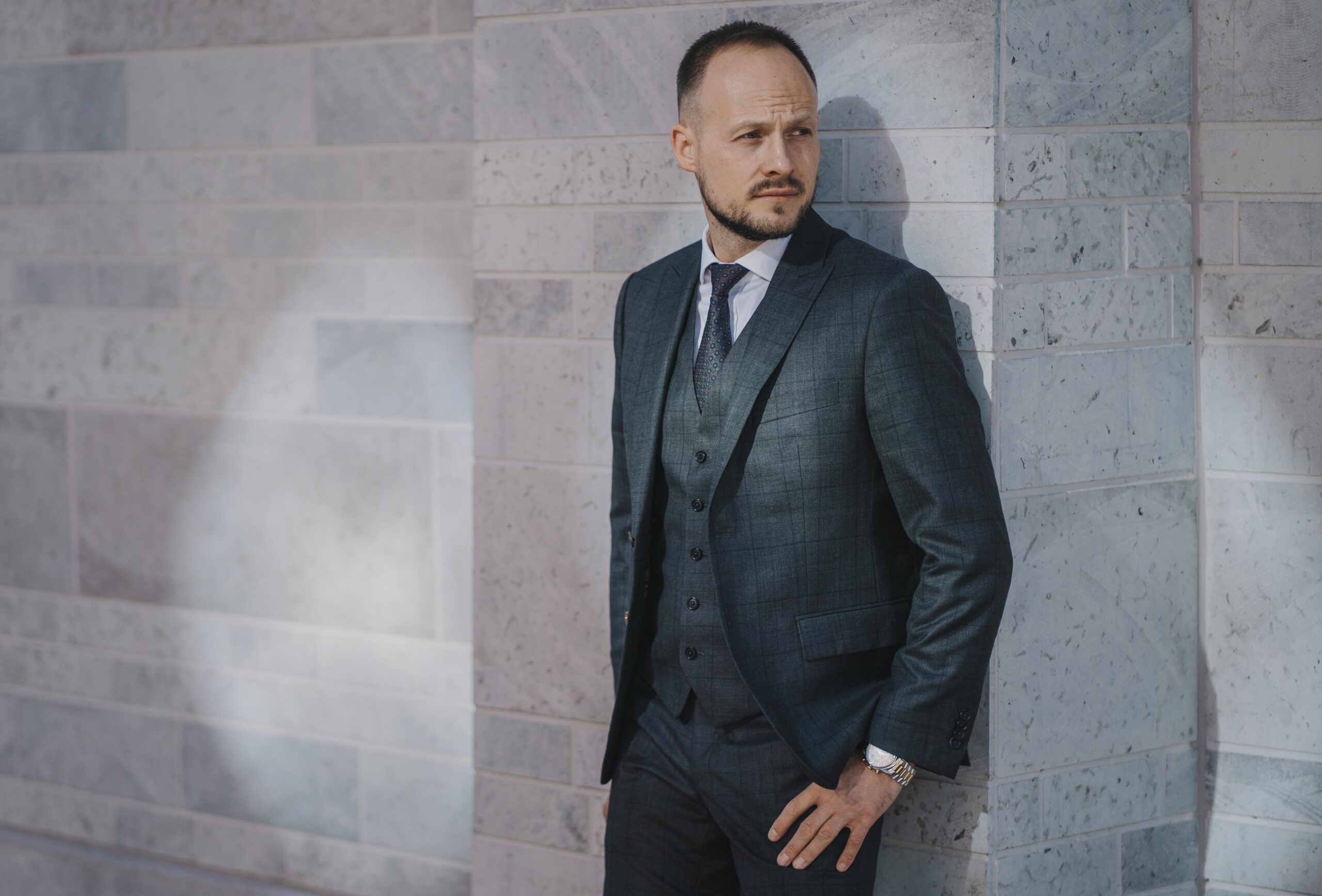
Hardi Põder
It’s lonely at the top because the job quietly removes the two things that protect people from loneliness: being known, and being allowed to need someone. In two 2012 surveys, 41 to 50 percent of US CEOs said they felt lonely in the role. More contacts don’t fix it. What helps is a few relationships in which you aren’t useful, in charge or performing.
“I have everything I ever wanted. But I feel completely alone.”
I hear some version of that sentence often. Different voice. Same pain.
The founder who employs 300 people and has no one to call on a Sunday. The CEO everyone respects and nobody really knows. The executive whose family loves the provider and misses the person.
Is it really lonely at the top?
For many leaders, yes. But the numbers everyone quotes are older and thinner than you’d think.
The figure that gets repeated most comes from a 2012 Harvard Business Review post: half of the CEOs in a survey by the consultancy RHR International said they felt lonely in the role, and 61 percent of that lonely half believed it hurt their performance (Saporito, 2012). The post gives no sample size. A better-documented RHR survey of 100 US CEOs that same year put the figure at 41 percent, and at 47 percent among CEOs of public companies (RHR International, 2012).
That is the state of the evidence on one of the most common conditions in senior leadership: two small surveys, fourteen years old. Even the academic research is young. A 2024 review of 71 studies concluded that leader loneliness is still poorly defined (Lam et al., 2024).
The peer-reviewed work does add an important twist. Across three studies, managers were neither more nor less lonely than the people they managed (Wright, 2012). In experiments, having more power actually made people feel less lonely (Waytz et al., 2015).
That nuance matters. If rank alone made people lonely, the fix would be to step down. What makes leaders lonely is how the role gets lived. Loneliness, as two of its leading researchers put it, “is not simply being alone.” It is perceived isolation, and it keeps you on alert for social threat while you quietly want to reconnect (Hawkley & Cacioppo, 2010). You can sit in rooms full of people all day and live inside it.
Dean Attwell co-founded a group of companies that employs 1,400 people. He found us through a LinkedIn post I’d written about lonely leaders. This is how he describes the top job:
“They say leadership, or the top job, is lonely, and it is lonely. People look at you and think, well, these guys must be all right, look at the house, look at the car. But that’s almost like the proverbial swan. You can’t see what’s going on under the water, can you?”
— Dean Attwell, co-founder, Oakland International (his story)
Why does success make leaders lonely?
Usually nobody leaves. The version of you that people are allowed to see just gets smaller every year.
When researchers interviewed C-suite executives at length, the reasons they gave were social distance, a lack of support and the sheer exhaustion of the role (Zumaeta, 2019). In practice, four things do it, slowly.
You carry information nobody else can hold. The layoffs before they’re announced. The deal that might die. The cash position. Even your family can’t help, because the stakes are too high, the data too confidential and the context too complex.
Almost everyone around you has a stake. Investors, employees, partners, even old friends who now work for you. People want something from you, and nothing real with you.
You become the strong one. The problem solver. The decision maker. The one who has it figured out. You train yourself not to need anyone, and then you start believing it.
Your problems stop counting. They become “good problems to have.” Your pain becomes invisible because you’re successful.
↳ Loneliness doesn’t care about your net worth.
A founder I worked with, I’ll call him Christoph, built five companies. Made money, lost money, made it again. The moment it broke open for him was a simple piece of arithmetic: a thousand business contacts, and not one person he could call to say he wasn’t okay.
People who would invest in his companies but never asked how he was. People who celebrated his wins and disappeared during his struggles.
He was surrounded by people and completely alone.
What does loneliness at the top cost?
More than most leaders budget for.
In a study of 672 employees and their 114 supervisors, lonelier people performed worse, partly because colleagues found them less approachable (Ozcelik & Barsade, 2018). Research on leaders’ daily lives found that on lonely days, followers rated their leaders as less effective (Gabriel et al., 2021). And among 377 owner-managers of small firms in France, loneliness was the route by which job stress turned into burnout (Fernet et al., 2016).
Read that again. Your team feels it before you name it.
The body keeps its own account. Across 70 studies with more than three million participants, loneliness was linked to 26 percent higher odds of dying during the follow-up period, and the links were stronger in samples with an average age under 65 (Holt-Lunstad et al., 2015). The US Surgeon General’s 2023 advisory put it this way: “The mortality impact of being socially disconnected is similar to that caused by smoking up to 15 cigarettes a day” (US Surgeon General, 2023).
None of this shows up on a board deck. That’s part of the problem.
Why doesn’t networking fix it?
Because networking adds contacts, and loneliness was never a shortage of contacts.
Most of the remedies leaders reach for make the gap wider. Another event. Another mastermind. Another round of dinners where everyone presents the best version of the quarter. Dean tried the physical version: Kilimanjaro, then the North and South Poles. In his words, they were “physically rewarding in terms of capability, but they weren’t hitting the spot.”
Peer groups for CEOs deserve a fair word. They are genuinely good at the role: decisions, strategy, the specific weight of the job. They are less good at the person under it, because most of us keep performing in front of peers too. Sometimes more.
↳ You cannot be known in a room where you are still being evaluated.
What actually helps with loneliness at the top?
Nothing on this list is clever. All of it is harder than it looks.
Say it out loud, once, to someone with no stake in you. A licensed therapist is the cleanest version of this, because the relationship exists for you and nothing else.
Find one room where you are not useful. Monika and I once invited strangers to our home. No agenda, no business angle, no alcohol. We sat at the table for seven and a half hours and drank five jugs of tea. Nobody made small talk. We talked about what wakes us at 3 a.m., the relationships that almost broke us, the money struggles nobody sees behind the success. Four people. No masks.
Go back to the people who knew you before the title. The friend you stopped calling the year you raised your first round. They knew you before you were impressive, which makes them the most underused resource you have. Robert Waldinger, who directs the Harvard Study of Adult Development, says the people most satisfied in their relationships at 50 were the healthiest at 80 (Harvard Gazette, 2017).
Use peers for the role and professionals for the person. Both are useful. Confusing them is how you end up in a mastermind, performing your vulnerability.
Swap brooding for one concrete step. In the study of leaders’ daily lives, loneliness fed on itself when leaders ruminated about how they felt, and eased when they reflected on a concrete problem instead, which also raised their engagement the next day (Gabriel et al., 2021). One call. One dinner. One honest sentence.
Let one person see the unimpressive version. Your partner is the obvious candidate. For many leaders I work with, it’s also the hardest one.
Your move, leader
If the company failed tomorrow, who would you call? Not to fix it. Just to tell.
When did someone last ask how you are and wait for the real answer?
Who in your life knows the version of you that isn’t impressive?
If you have to think hard to answer, that is information.
If you can’t name a single person, that is the loudest information of all, and it is more fixable than you think.
The view from the top is only beautiful when you have someone to share it with.
↳ The question isn’t “Is this it?” It’s “Who’s with me?”
Cheers,
Hardi
P.S. — Those fourteen-year-old numbers bother me, so we are running the study to replace them. The Executive Loneliness Index asks founders, CEOs and board members the questions this article ends on, including whether they have ever said any of it out loud, and to whom. The 2026 edition was fielded August to October. The results, the full question set and the anonymized raw data are published free in November 2026.
P.P.S. — INLIBRIUM is a six-month, medically supervised program for founders and executives who have won the external game and gone quiet about the rest. If you’d like a private conversation, my inbox is open.
About the author -
Hardi Põder
For clients carrying the strain of sustained responsibility, Hardi Põder helps make INLIBRIUM a disciplined, coordinated six-month process rather than a collection of disconnected interventions. As CEO & Co-Founder, he brings an operator’s understanding of what performance can conceal and what it takes to build a structure capable of meeting a client over time.
Before founding INLIBRIUM with Monika Jakobson in 2021, Hardi spent roughly two decades building nine companies across agriculture, IT, retail, and biotech. His work included leading sales teams of more than 600 people across Scandinavia and the United States, as well as building an outdoor medicinal-mushroom plantation. That background informs a practical standard for the company: complex work should be organized clearly, individualized carefully, and carried through consistently.
Hardi’s search after burnout clarified a gap he had seen in the field. A powerful psychedelic experience can create insight, but insight alone may not alter the conditions and habits that shape daily life. He and Monika founded INLIBRIUM to build a more complete model around preparation, clinical screening, psychological care, health review, and sustained integration.
The model Hardi helped establish links three private residencies with months of planned work. Psychological, health, and leadership specialists remain connected around the same client. As CEO, he leads the company responsible for that model; clinical decisions and care rest with appropriately qualified practitioners.
He is clear about the limit of any single element. The substance may be a catalyst, but preparation, judgment, and disciplined follow-through determine whether insight can be carried into a life.