


Monika Jakobson
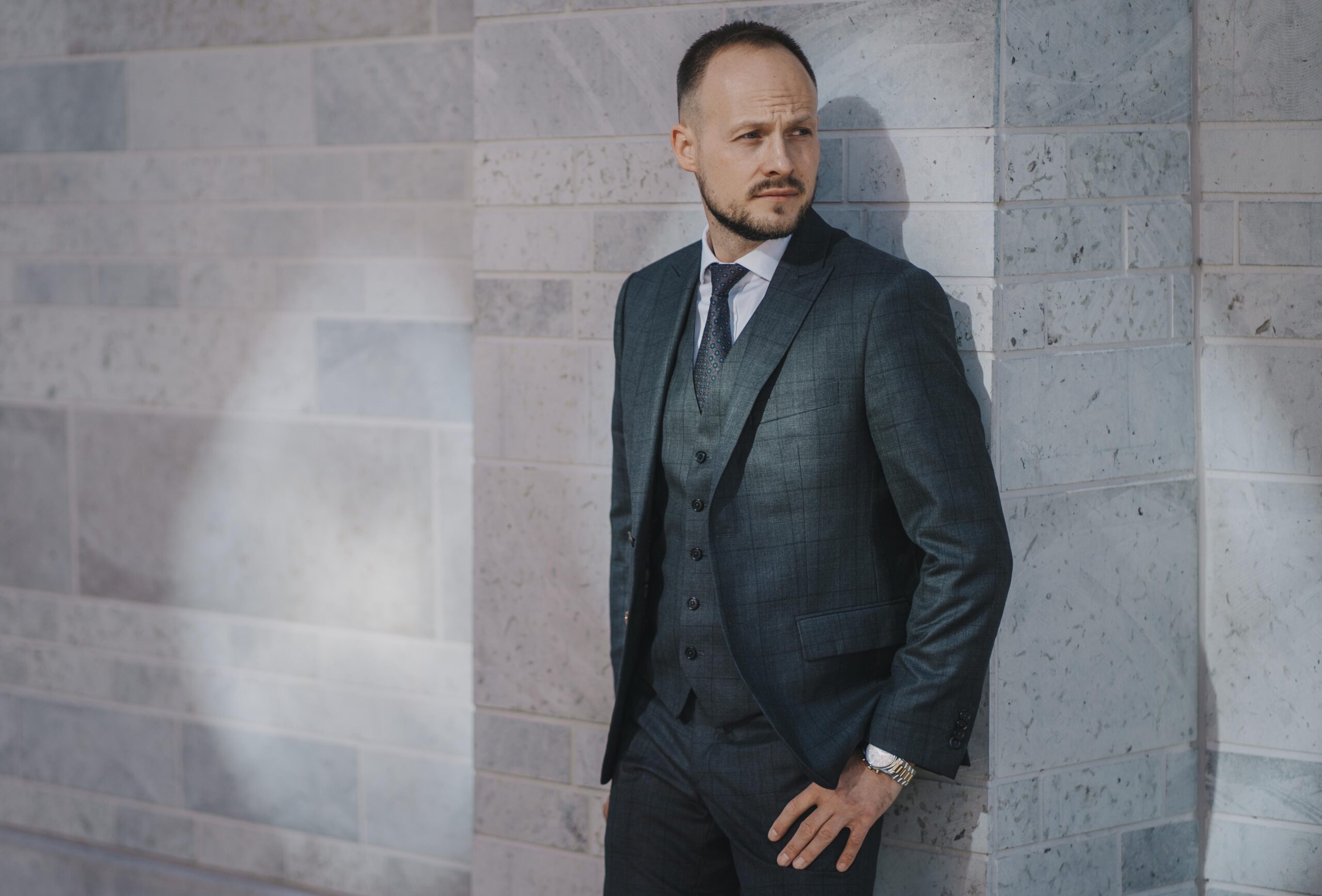
Hardi Põder
The revival of psychedelic research over the last few decades has brought about a whole new understanding of their potential as novel treatments in mental health. Protocols emerging in clinical trials around the world are aiming to find the perfect recipe for psychedelic-assisted therapy (without much consensus).
Research protocols are indispensable–not just for a tangible measurement of the healing potential of psychedelics, but to world-wide efforts to reverse the damaging effects of the War on Drugs that pushed psychedelics underground for over two decades.
Protocols also inform what psychedelic is used for what–for example, MDMA for PTSD or social anxiety in autistic adults, versus psilocybin for end-of-life anxiety in cancer patients. Protocols discern what makes a good candidate for psychedelic-assisted therapy and what dose is right to achieve the desired state. They dictate the objectives, measurements, and methods used in order to test a hypothesis–for example, is psilocybin as effective in the treatment of major depression compared to the classic anti-depressant escitalopram (short answer: yes, it is; long answer: it’s complicated).
The limitations of protocols
However, it’s important to keep in mind that protocols are centered around a hypothesis, not the individual. Very often, scientists have to navigate funding challenges when it comes to the amount of therapeutic support participants get before and after a psychedelic journey.
And while the standardization of protocols is necessary for the measurement of specific outcomes, it often comes at the cost of effective treatment for the individuals involved. A close examination of most studies reveals that not all participants get better; a few experience adverse effects; and, most commonly, participants’ symptoms return.
A recent study by Johns Hopkins optimistically estimates that psilocybin-assisted therapy may alleviate symptoms of depression for up to a year. If this doesn’t sound significant, consider that previously efficacy was capped at only four weeks.
The high rates of remission have little to do with psychedelics themselves. However, they suggest that most people need a more comprehensive treatment plan than most protocols can accommodate. In a very grounded and sobering piece, the former clinical lead on the psychedelic trials at Imperial College London, Rosalind Watts, recognizes the lack of sufficient integration in most research and retreat protocols:
“People were flocking to psychedelic retreats, many had wonderful experiences, but most of them did not receive the kind of aftercare they needed. After such an intense experience, they found themselves left alone to understand it, process it, and try and incorporate the teachings into their lives.”
And it’s not just the lack of proper integration. Most of the latest research studies on psychedelics remain fixated on the brain. Despite the increased awareness of how the body keeps the score of stress and trauma, or the gut-brain connection, the majority of treatments hold a rigid loyalty to a cognitive, behavioral, and motivational level–maintaining the outdated view that healing is as simple as changing your mind.
Even newer, more comprehensive protocols only bring attention to the body to the extent of the therapy session itself. The quality of nutrition, sleep, physical activity, spiritual practice, relationships, even the environment where one lives and works largely remain unaddressed.
This, of course, is reflected in the non-medical world. Most group retreats employ their own protocols to ensure participant safety, which leaves very little capacity for individual care. The frequency of ceremonies typical of an Ayahuasca retreat can be just right for some, but particularly overwhelming for psychedelic novices or those who require a gentler pace. On the other hand, the one-two journeys on a psilocybin retreat may kickstart a process of transformation, but not bring it to completion due to restrictions on ceremony runtime and the facilitator’s limited availability. The lack of a structured integration program and the absence of ongoing support pose further challenges for lasting postive change.
But there’s another way.
“There is no one pattern of healing, however each process goes its own individual way, and as in alchemy, one returns to the transformative fire many times to go through the process on another level.” — Marion Woodman, Jungian analyst
What if you were the protocol?
Here, at Inlibrium, we celebrate protocols; and we gleefully rebel against them.
Our solution to the challenges highlighted in this article was to build a business model of no compromise. After all, we’re not a medical institution; we don’t work with clinical diagnoses; we’re a retreat focused on supporting leaders actualize their potential in order to maximize their positive impact on the world. The radical change we want to create meant that we had to take a radical position.
Free from the restrictions of the clinical or group models, we built a business that puts you at the center of the experience.
We call this the alchemy of personalized care–a process of transformation honoring that you are a unique microcosm of beliefs, experiences, emotions, sensations, needs, and aspirations. You’re not just your mind, but also a body and a participant in relationships, communities, and the world at large. And if any meaningful transformation is to occur, it has to be completely tailored to all aspects of you.
It’s no accident that we’re inspired by alchemy. The beauty of this early art lies in its deeply experiential and mysterious nature. In their search for the inner gold, alchemists had to start by building a robust container. They knew that what would happen inside couldn’t be predicted–therefore the alchemical vessel needed to be strong enough to endure various operations and not spill over. The trust in the container allowed them to follow the natural flow of transformation that each substance required in order to achieve the Magnum Opus.
Inlibrium is that container. In the absence of prescribed protocols, your process of transformation can take its own creative shape. Your nervous system, history, and goals dictate the rhythm, frequency, and length of the process. What’s more, our extended team of specialists is there to monitor and mediate your transformation beyond the psychedelic experiences themselves. A holistic, multidisciplinary approach with a strong emphasis on integration ensures that each transmutation is assimilated before moving forward–no part of you is left behind.
The downside is that, however successful, the transformation is difficult to capture in numbers and words; depression scales simply don’t work on inner gold. A reduction in anxiety is not the same as turning your life around or finding your purpose. The scales are simply not big enough.
What if, instead of measuring our success by the alleviation of symptoms, we measured it by the intimacy of our relationships,
by our unconditional acceptance of ourselves,
by our sense of purpose,
by the way we lead our businesses with passion rather than power,
and ultimately by our impact on the world?
That’s the scale of work the Inlibrium container is ready to hold.
The vessel is waiting–are you ready to step in?
About the author -
Monika Jakobson
For an INLIBRIUM client, Monika Jakobson makes the health and science layer coherent: she turns a broad set of personal inputs into a clear, individualized frame for the team’s work. As Co-Founder & Health and Science Director, she leads the health-data architecture that connects genetics, biomarkers, health history, daily patterns, behavior, and physical experience. The aim is not to reduce a person to a report, but to give relevant information its proper place in a personalized program.
Monika’s foundation includes studies in psychology and professional higher education in health promotion and nutrition at Tallinn University, alongside advanced study in nutrition and health coaching. She has also completed training in nutrigenetics, nutrigenomics, and pharmacogenomics. Before INLIBRIUM, she worked in nutrition and health-promotion roles in preventive and functional-health clinic settings and developed an independent practice focused on DNA and functional testing. This background informs how she approaches complexity: by looking across sources rather than treating any single measurement as decisive.
Throughout the six-month program, Monika helps define which health information is relevant, organizes it in a usable form, and keeps the individualized plan responsive as new context emerges. She coordinates closely with the program team and the appropriate licensed medical and mental-health professionals, whose scopes of practice remain distinct. Her responsibility is not to diagnose or provide treatment, but to ensure that health and science work is considered, connected, and proportionate to the individual.
Monika is attentive to the distance between what can be measured and what a person experiences. Data earns its value when it improves attention and decision-making without displacing judgment, context, or the client’s own account of life.
About the author -
Hardi Põder
For clients carrying the strain of sustained responsibility, Hardi Põder helps make INLIBRIUM a disciplined, coordinated six-month process rather than a collection of disconnected interventions. As CEO & Co-Founder, he brings an operator’s understanding of what performance can conceal and what it takes to build a structure capable of meeting a client over time.
Before founding INLIBRIUM with Monika Jakobson in 2021, Hardi spent roughly two decades building nine companies across agriculture, IT, retail, and biotech. His work included leading sales teams of more than 600 people across Scandinavia and the United States, as well as building an outdoor medicinal-mushroom plantation. That background informs a practical standard for the company: complex work should be organized clearly, individualized carefully, and carried through consistently.
Hardi’s search after burnout clarified a gap he had seen in the field. A powerful psychedelic experience can create insight, but insight alone may not alter the conditions and habits that shape daily life. He and Monika founded INLIBRIUM to build a more complete model around preparation, clinical screening, psychological care, health review, and sustained integration.
The model Hardi helped establish links three private residencies with months of planned work. Psychological, health, and leadership specialists remain connected around the same client. As CEO, he leads the company responsible for that model; clinical decisions and care rest with appropriately qualified practitioners.
He is clear about the limit of any single element. The substance may be a catalyst, but preparation, judgment, and disciplined follow-through determine whether insight can be carried into a life.