
PhD
Conscious Leadership Advisor
Selected Experience & Credentials
PhD in Jungian Studies, Saybrook University
Master’s degree in Counseling Psychology, with a focus on Depth Psychology, Pacifica Graduate Institute
More than 25 years of psychology-informed executive development
Certified Personal and Executive Coach, College of Executive Coaching
Certified in EQ-i 2.0 and EQ-i 360 assessments
Author of Cognitive Enlightenment: A Disciplining of Your Mind (Novum Publishing)
Melinda Fouts, PhD, is the INLIBRIUM advisor for clients who recognize that a difficult decision, a recurring conflict, or a swift reaction may have roots outside conscious intention. Her work creates room to study an individual’s unconscious emotional operating system beneath those moments—not to grade leadership behavior or fit someone to a model, but to make the underlying dynamics more intelligible. It is a disciplined inquiry into the personal history carried into present choices.
Her perspective draws on Jungian and depth psychology, counseling psychology, and more than 25 years of psychology-informed executive development. Melinda has also worked in private psychotherapy practice, experience that informs her attention to the stories, assumptions, and relational dynamics that people may carry into demanding roles. At INLIBRIUM, however, her contribution is non-clinical leadership advisory. She does not treat diagnosis as an answer, and she avoids reducing a person to an assessment or a type.
Across the six-month program, Melinda meets with clients individually and coordinates with the broader INLIBRIUM team so that reflection remains connected to the client’s wider work. She may invite attention to recurring inner narratives, emotional reflexes, repeated responses under pressure, and assumptions, then help the client consider what becomes possible when these are recognized rather than automatically enacted. The emphasis is on self-awareness and self-understanding, not performance optimization.
Melinda’s approach is discreet and exacting: behavior becomes more useful to examine when it is understood as information. The question is not how to perform a different version of oneself, but what one’s established responses have been trying to manage.
Selected Publications
Writing
What’s missing in metrics-focused leadership? — Forbes Coaches Council · May 2026
Getting out of your own way: inner barriers to success — Forbes Coaches Council · April 2026
Successful leaders often lack self-awareness — Forbes Coaches Council · February 2026
Books

Cognitive Enlightenment: A Disciplining of Your Mind — 2019 · novum premium
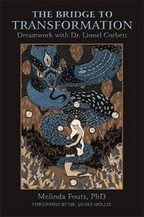
The Bridge to Transformation: Dreamwork with Dr. Lionel Corbett — 2025 · foreword by Dr. James Hollis.