Psychedelic-assisted work is not safe for everyone, and no honest program pretends otherwise. Before anyone is accepted into the Integral Self-Actualization Program, they complete a two-part eligibility assessment: a psychiatric screening that rules out contraindications, and a medical review covering bloodwork, cardiovascular and renal markers, blood pressure, health history and current medications. Some people are declined. That is the point of screening.
This page explains exactly what we assess, what rules someone out, and what happens during a supervised session - so you can judge our standard against the published clinical evidence rather than against marketing language.
Is psychedelic-assisted therapy safe?
In supervised clinical settings with proper screening, classic psychedelics are generally well tolerated. A 2024 meta-analysis of 30 studies counted nine serious adverse events across more than 1,000 supervised administrations, and a recent systematic review found serious adverse events in about 4% of participants who already had pre-existing neuropsychiatric conditions. The safety profile depends almost entirely on two things: who is screened out, and who is in the room. Neither is optional.
Who should not take psilocybin?
A personal or family history of schizophrenia-spectrum or psychotic disorders, or bipolar I or II. Uncontrolled hypertension, recent myocardial infarction or stroke, cardiac arrhythmia, severe coronary artery disease, and moderate to severe renal or hepatic impairment. Current lithium treatment. These are the same exclusions used across FDA-regulated psilocybin trials.
Can you take psilocybin on antidepressants?
Clients on SSRIs/SNRIs are not automatically excluded. Each case is reviewed by our medical team - an MD (neurologist) and/or clinical psychologist, together with a dual board-certified nurse practitioner (FNP-BC and PMHNP-BC) - who review the client’s mental health history and, where appropriate, consult directly with the prescribing physician.
Decisions about medication are made through the client interview and the medical and psychiatric screening process. We do not publish a fixed taper or washout rule, because there is not one: it is decided per person, in screening, never by you alone and never abruptly. SSRIs and SNRIs are known to blunt the acute effects of psilocybin, and that blunting can persist for a period after discontinuation. Any change to psychiatric medication is a clinical decision made by a clinician who knows your history.
Serotonin syndrome is the interaction people search for most. In the published trials of psilocybin given alongside an SSRI, the finding is a weaker experience rather than a toxic one: in a placebo-controlled study in which healthy volunteers took escitalopram for two weeks before psilocybin, anxiety and cardiovascular effects were lower, not higher, and in a phase II trial of psilocybin for treatment-resistant depression in patients who stayed on their SSRI, no serious adverse events occurred. The combinations with a genuine toxicity signal are MAOIs and lithium. Both are absolute exclusions here.
Is psilocybin safe with high blood pressure or a heart condition?
Psilocybin raises blood pressure by roughly 19 mmHg systolic and 9 mmHg diastolic for a few hours, with the peak around 60-90 minutes after dosing. A healthy cardiovascular system handles that without difficulty. Uncontrolled hypertension, a recent heart attack or stroke, an arrhythmia or severe coronary artery disease rule someone out. Blood pressure that is treated and stable is not an automatic exclusion; it is one of the things the medical review exists to look at, with your bloodwork, cardiovascular and renal markers and medication list in front of a clinician.
What does the screening consist of, and who reviews it?
Two parts, both before acceptance. A psychiatric screening: a questionnaire followed by an interview with a psychiatrist. A medical review: a questionnaire, then your bloodwork, cardiovascular and renal markers, blood pressure, BMI, health history and every medication and supplement you take, reviewed with a nurse practitioner or physician in an interview. If the physician judges it necessary, you are also referred for an EKG. Family psychiatric history is read directly by our screening neurologist and our dual board-certified nurse practitioner. Where appropriate, we speak to your prescribing physician. Some people are declined at this stage. That is what the stage is for.
Is a doctor present during the session, and what is the emergency protocol?
A dual board-certified nurse practitioner - credentialed as both a Family Nurse Practitioner (FNP-BC) and a Psychiatric Mental Health Nurse Practitioner (PMHNP-BC) - is physically present on site throughout the residency, including during every session, and is the first responder to anything that arises. Two trained facilitators are in the room for the full duration of every psychedelic session, with a wider team of four to five experts on site and staff present 24/7. A local physician is available in Jamaica, and our own MD (neurologist) and clinical psychologist are reachable at all times.
Resuscitation equipment is kept on site, and a hospital in Montego Bay is approximately 10 km away. Escalation pathways have been developed by our clinical team and are in place before any client arrives. To date, no residency has required medical intervention of any kind. Every measure is in place regardless - preparedness is not something we scale to the likelihood of needing it.
How long does integration last?
Six months, not six weeks. Each of the three residencies is followed by structured integration: weekly psychotherapy calls, weekly health calls and coaching between residencies, and a closing phase after the third. Across the program that is 20-24 sessions with your psychiatrist or psychologist alone, a similar number with your health expert, and 10-12 with your Conscious Leadership coach. These are in addition to the one-on-one coaching and integration sessions held on site during each residency. The residency is the catalyst. Integration is the work, and we have written separately about why breakthroughs fade and what holds.
Part one - psychiatric screening
The psychiatric assessment is a questionnaire followed by an interview with a psychiatrist. It exists to answer one question: is there anything in this person’s history that makes a psychedelic session likely to harm rather than help?
What rules someone out
Absolute exclusion
Why
Schizophrenia-spectrum disorder
Classic psychedelics can precipitate or worsen psychosis.
Psychotic disorder
Same mechanism; the risk is not one we accept.
Bipolar I or II
Risk of triggering a manic or mixed episode; case reports document this.
Severe cardiac or renal failure, or any other serious medical diagnosis that could be life-threatening
The cardiovascular response is real and measurable; a compromised system has no margin.
MAOIs
Serious interaction risk with serotonergic compounds.
What is assessed rather than excluded
Family psychiatric history is covered in our medical and psychiatric intake questionnaire and reviewed directly by the screening neurologist and the nurse practitioner. It informs the assessment rather than functioning as an automatic exclusion.
We are not a clinical trial or a hospital, and we do not apply trial eligibility criteria as if we were. Addiction, for example, is something we work with rather than screen out.
The extent to which psilocybin may unmask an undiagnosed bipolar spectrum disorder is not fully understood - which is precisely why family history matters and why a questionnaire alone is not enough. This is a conversation with a psychiatrist, not a form.
Part two - medical review
The medical assessment is a questionnaire, a review of your documents with a nurse practitioner or physician, and an interview. It covers bloodwork, cardiovascular and renal markers, blood pressure, health history, BMI and every medication and supplement you take.
Why cardiovascular screening is not a formality
Psilocybin, the active compound in magic mushrooms, produces a real, measurable cardiovascular response. Pooled analysis across studies shows mean increases of roughly 19 mmHg systolic and 8.7 mmHg diastolic blood pressure, with the largest changes around 60-90 minutes after dosing and resolution generally within four to six hours. In one pooled dataset, readings above 140 mmHg systolic occurred in half of administrations, and heart rates above 100 bpm in 7%.
For a healthy cardiovascular system this is unremarkable and transient. For someone with uncontrolled hypertension, a recent cardiac event or an arrhythmia, it is not. That is the difference a blood-pressure cuff and a lipid panel make - and it is the step most retreats skip.
There is also a separate, longer-term question: psilocybin has affinity for the 5-HT2B receptor, and 5-HT2B agonism is the mechanism behind valvular heart disease seen with certain withdrawn medications. For the intermittent dosing used in supervised therapeutic work this remains a theoretical concern rather than a demonstrated harm - but it is a real reason why frequent, unsupervised or self-directed dosing is a different risk category from six supervised sessions across six months.
Medication interactions we screen for
Every medication and supplement is reviewed. Three categories matter most.
Medication
What the evidence shows
Consequence
Lithium
An analysis of 62 online reports of psychedelic-lithium co-administration found seizures in 47% of cases, with 39% involving medical attention. Every psilocybin trial run under FDA oversight excludes participants on lithium.
Absolute exclusion.
MAOIs
Serious interaction risk with serotonergic compounds.
Absolute exclusion.
SSRIs / SNRIs
Known to blunt the acute subjective effects of psilocybin; in one analysis, roughly a 47% chance of reduced effects. Blunting can persist for a period after discontinuation. Notably, recent work suggests therapeutic outcomes may be less affected than the acute experience.
Individual clinical decision - never a self-managed taper.
Nothing on this page is medical advice, and none of it is a substitute for a conversation with a clinician who knows your history. Do not start, stop or change any medication based on a website. If any of it applies to you, or you are unsure whether it does, speak to your own doctor.
What happens during a session
Each residency includes two psychedelic-assisted therapy sessions. Two facilitators are present for the full duration of each one - not on call, not nearby, present. A team of four to five experts is on site across the seven days, alongside a dedicated staff of seven and 24/7 presence.
A dual board-certified nurse practitioner - credentialed as both a Family Nurse Practitioner (FNP-BC) and a Psychiatric Mental Health Nurse Practitioner (PMHNP-BC), currently completing her doctorate - is physically present on site throughout the residency, including during every session. She is the first responder to anything that arises. A local MD is available in Jamaica, and our own MD (neurologist) and clinical psychologist are reachable remotely at all times. Resuscitation equipment is kept on site, and a hospital in Montego Bay is approximately 10 km away.
Escalation pathways have been developed by our clinical team and are in place before any client arrives. To date, no residency has required medical intervention of any kind. Every measure is in place regardless. Preparedness is not something we scale to the likelihood of needing it.
Who we turn away
We accept a limited number of clients each year, and screening is not a formality that everyone passes. People are declined for clinical reasons - the exclusions above - and also for reasons that have nothing to do with medicine.
Anyone looking for a weekend breakthrough or a quick fix.
Anyone treating this as an escape rather than committed work.
Anyone unwilling to commit the time, honesty and attention that six months demands.
Anyone who wants the experience without the preparation and integration around it.
If that sounds like a filter, it is. The alternative is taking money from people the work will not help.
Why our standard is what it is
The screening protocol follows the exclusion criteria used in FDA-regulated psilocybin trials rather than retreat-industry convention - applied to a private program, by clinical leads with decades of experience in psychedelic research and clinical trials.
“We don’t treat diagnoses. We work with one person at a time - and that is not a figure of speech. Everything, from screening to the six months that follow, is built around a single individual, assessed as a whole human being by senior specialists in each field. Our screening is extensive because for us, safety and personalization are the conditions for everything else. I don’t believe this work can be done responsibly any other way.”
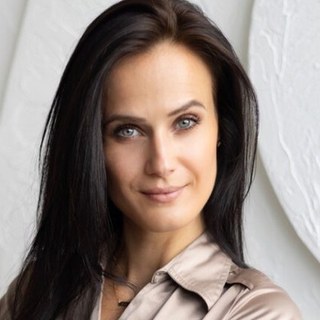
Monika Jakobson, Co-founder, Health & Science Director

Hardi Põder, Co-founder, CEO
Sources
The figures and claims on this page draw on the following peer-reviewed sources.
Hinkle J.T. et al. Adverse events in studies of classic psychedelics: a systematic review and meta-analysis. JAMA Psychiatry, 2024. doi.org/10.1001/jamapsychiatry.2024.2546
Romeo B. et al. Safety and risk assessment of psychedelic psychotherapy: a meta-analysis and systematic review. Psychiatry Research, 2024. doi.org/10.1016/j.psychres.2024.115880
Szarpak L. et al. Cardiovascular safety of psilocybin in psychiatric practice: a narrative review. European Journal of Clinical Pharmacology, 2026. doi.org/10.1007/s00228-026-04151-2
Yu C.-L. et al. Trajectory of antidepressant effects after single- or two-dose administration of psilocybin: a systematic review and multivariate meta-analysis. Journal of Clinical Medicine, 2022. doi.org/10.3390/jcm11040938
Becker A.M. et al. Acute effects of psilocybin after escitalopram or placebo pretreatment in a randomized, double-blind, placebo-controlled, crossover study in healthy subjects. Clinical Pharmacology & Therapeutics, 2022. doi.org/10.1002/cpt.2487
Goodwin G.M. et al. Psilocybin for treatment resistant depression in patients taking a concomitant SSRI medication. Neuropsychopharmacology, 2023. doi.org/10.1038/s41386-023-01648-7
Erritzoe D. et al. Effects of discontinuation of serotonergic antidepressants prior to psilocybin therapy versus escitalopram for major depression. Journal of Psychopharmacology, 2024. doi.org/10.1177/02698811241237870
Sarparast A. et al. Drug-drug interactions between psychiatric medications and MDMA or psilocybin: a systematic review. Psychopharmacology, 2022. doi.org/10.1007/s00213-022-06083-y
Nayak S.M. et al. Classic psychedelic coadministration with lithium, but not lamotrigine, is associated with seizures: an analysis of online psychedelic experience reports. Pharmacopsychiatry, 2021. doi.org/10.1055/a-1524-2794
One client at a time, every member of staff under a non-disclosure agreement, and consent to be named that remains revocable at any time. Including what we cannot promise.
Ten jurisdictions, each with the legal mechanism that actually applies: never scheduled, prescription only, individual government authorization, or supervised access with no diagnosis at all. Including where our own residencies take place, and why.
The medical exclusions in full, and the seven reasons a medically eligible person is still declined. Written so you can rule yourself out in four minutes instead of four conversations.